
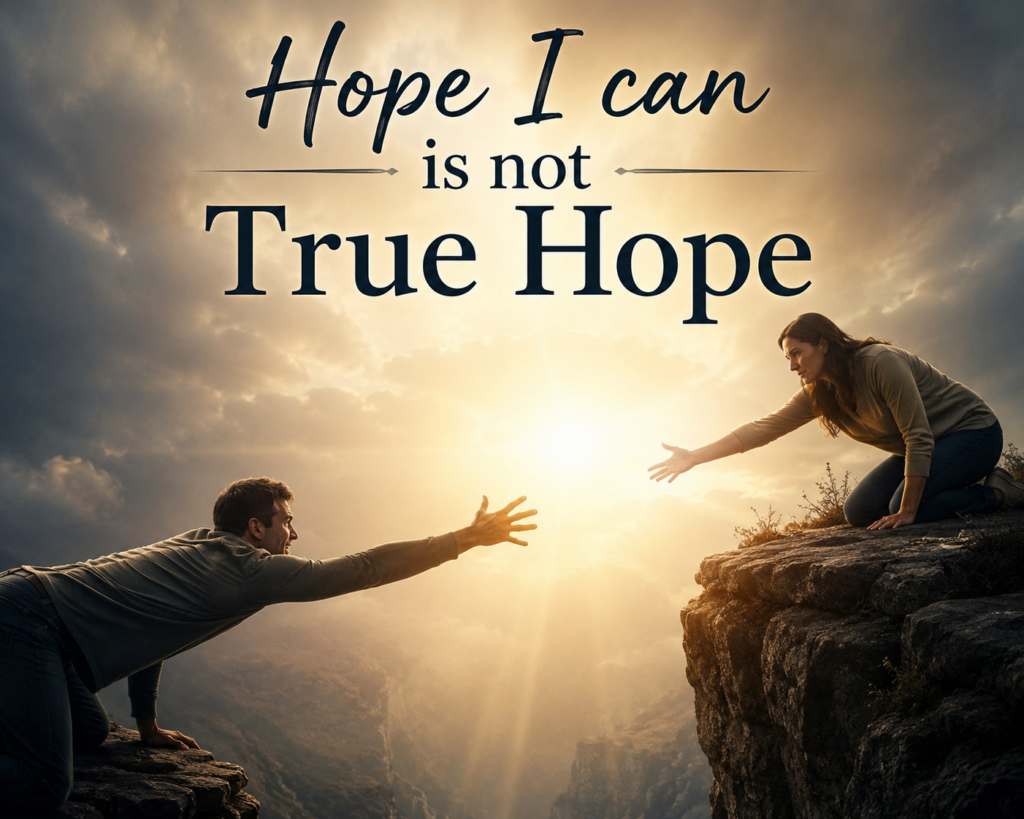
There is a simple truth about marriage that is easy to forget when life becomes difficult: when we believe the future can be better, we are far more willing to do something today to make it better. That is the power of hope.
Hope is more than a wish or positive thinking. It is the belief that what we see today does not have to determine what we experience tomorrow. Hope allows us to look at a problem and say, “This is difficult, but it does not have to stay this way.” Circumstances can remain exactly the same, yet our response to those circumstances can dramatically change when we begin to believe improvement is possible. Hope shifts our attention from what cannot be changed to what can be changed, and that shift will transform a marriage.
Whether your marriage is already good and you simply want it to become stronger, or whether you are wondering if your relationship can survive another month, hope is one of the most important things you can bring back into your relationship.
Good Marriages Need Hope Too
We often talk about hope as though it is only necessary during a crisis, but healthy marriages need hope because healthy marriages are always becoming something. You can love each other deeply and still have areas where your marriage could improve. Communication can become stronger. Friendship can deepen. Intimacy can grow. Trust can become even greater. You can discover new dreams, create new memories, laugh more often, serve one another more intentionally, and become better partners than you were a year ago.
One of the dangers of a good marriage is becoming satisfied with “good enough.” You stop asking questions. You stop dreaming together. You stop learning about each other. Before long, you can find yourselves managing life together rather than intentionally building a life together.
Hope asks a different question: “What could our marriage become?” Instead of focusing only on what is already working, hopeful couples remain curious about what could become even better. What if we communicated differently? What if we protected more time for one another? What if we became more intentional about affection? What if we started dreaming together again? What if the next ten years of our marriage could become better than the last ten?
Hope fuels imagination, creativity, and the willingness to explore possibilities. It causes us to believe there may be another level of connection we have not yet experienced. A great marriage is not simply something you have. It is something you continue to build.
Crisis Marriages Need Hope Before They Need a Plan
For a couple in crisis, the challenge is different. When people have been hurting for months or years, they do not want someone to agree with them that their marriage has problems. They already know that. They need someone to help them believe that the problems have solutions.
Pain has a way of narrowing our vision. After enough arguments, disappointments, betrayals, or unresolved conflicts, couples begin making declarations about their future based entirely upon their past. “Nothing ever changes.” “We’ve already tried everything.” “He will never understand.” “She will never trust me again.” “We’re just too different.” “There is no way back from this.”
Those statements may sound like conclusions, but they are expressions of lost hope. When hope disappears, effort usually disappears shortly afterward. Why keep trying if nothing can change? Why have another conversation if it will only become another argument? Why seek help if nobody can help us? Why become vulnerable again if vulnerability has only led to more pain?
That is why restoring hope can be such an important first step in restoring a marriage. You do not have to know exactly how everything will change before you can believe that change is possible. You simply have to become willing to take the next right step.
Hope Changes What You Look At
When marriages are struggling, couples naturally become experts on what is wrong. They can describe the arguments in detail. They remember every failure. They know exactly what their spouse does that frustrates them, and they may have replayed painful conversations dozens of times.
Hope begins shifting the question from “What is wrong with us?” to “What could we do differently?” That does not mean ignoring reality. It means refusing to believe that today’s reality has the final word.
Instead of saying, “We can’t communicate,” hope allows you to say, “We haven’t learned how to communicate about this successfully yet.” Instead of saying, “We’ve lost everything we once had,” hope asks, “We have lost some things that mattered to us. What would it take to begin rebuilding them?” Instead of concluding, “I don’t know if this marriage can be saved,” hope says, “I know things are uncertain, but I am willing to find out what is still possible.”
Those are not insignificant changes in language. They represent a completely different posture toward the marriage. Hope does not deny the problem. It simply refuses to give the problem the authority to determine the future.
Hope Refuses to Let the Past Dictate the Future
Every marriage has a history. Some histories contain wonderful memories. Others contain wounds. Most contain both. The danger comes when yesterday becomes the only evidence we allow ourselves to consider when predicting tomorrow.
Hope allows us to learn from failure without allowing failure to define us. A husband can acknowledge, “I have not always been the husband I should have been, but I can learn to become a better one.” A wife can acknowledge, “I have been deeply hurt, but I am willing to explore whether trust can be rebuilt.” A couple can honestly say, “We have developed unhealthy patterns, but patterns can change.”
Hope does not erase responsibility. Hope increases responsibility because once we believe something can change, we must decide how we are going to participate in changing it. Hope moves us from simply identifying what our spouse has done wrong to asking, “What can I do differently? What can we learn? What conversations do we need to have? What help do we need to seek?”
Sometimes Hope Looks Like Asking for Help
One of the most dangerous things struggling couples can do is wait until they feel hopeful enough to seek help. Sometimes the opposite is necessary. You seek help because you need someone to help you find hope again.
If the two of you keep having the same conversation, resulting in the same argument, and producing the same hurt, you do not need another round of the same conversation. You need someone who can help you see the conversation differently.
Marriages do not deal with fifty different problems. They deal with a few unresolved issues that continue appearing in fifty different ways. When you are standing in the middle of the conflict, it can be extremely difficult to see those patterns. That is one of the reasons seeking help can be so valuable.
Getting help is not an admission that your marriage has failed. It is evidence that your marriage still matters enough to fight for. You just need to find some hope for a better future.
Bringing Hope Back Into Your Marriage
Bringing hope back into your marriage begins with changing the conversation taking place inside your own mind. Pay attention to the absolute statements you make about your spouse and your marriage. Words such as “never,” “always,” “impossible,” and “hopeless” can quietly convince you that trying is pointless. You may not be able to immediately change your circumstances, but you can begin changing what you believe is possible within those circumstances.
If your marriage has been struggling, you have probably spent plenty of time thinking about everything that has gone wrong. You should also ask, “What could go right?” What might happen if you gave equal energy to thinking about what could happen if the two of you learned some new skills, received wise guidance, and began making different decisions?
It is also important to remember what you have already overcome. Think about seasons you survived together. Remember why you chose one another. Remember moments when your relationship was strong. Your history is not composed only of failures. Remembering where you have been and what you have already survived gives you courage for the next step.
Then take one action instead of demanding the entire solution. You do not have to repair fifteen years of pain tonight. Start with one healthy conversation. Offer a sincere apology. Ask better questions. Schedule an appointment for help. Take one step. Small actions, consistently repeated, begin changing the direction of a marriage.
Finally, be willing to borrow hope when you do not have enough of your own. Sometimes another person can see possibilities you cannot yet see. That is one reason coaches, pastors, mentors, and trusted friends can play such an important role when a marriage becomes stuck. Their perspective does not replace the work you must do, but it helps you see a path you could not see on your own.
You Do not Need a Guarantee. You Need a Next Step.
We understand why hurting couples want guarantees. “Can you guarantee this will work?” “Can you guarantee my spouse will change?” “Can you guarantee we’ll stay married?” No one can guarantee another person’s choices, but you do not need a guarantee before taking a healthy step.
You need enough hope to say, “Our story is not finished.”
Good or Bad, There Is Still Hope
Maybe your marriage is already good. Do not stop building it. Dream again. Talk again. Learn again. Date again. Laugh again. Discover the people you are both becoming. Do not assume that because your marriage is healthy today there is nothing more for the two of you to experience together.
If your marriage is hurting, do not make a permanent decision simply because you are standing in a painful season. There are conversations you have not had. There are tools you have not learned. There are wounds that have never been properly addressed. There are solutions you cannot see from where you are standing today.
Hope says there is still another chapter. Making the courageous decision to ask for help is the decision that begins writing it.
If your marriage is good and you want to make it stronger, we would love to help you intentionally build what comes next. Marriage should not be about avoiding divorce or surviving difficult seasons. It can be about becoming more connected, more intentional, more intimate, and more united as you continue building a life together.
If your marriage is in crisis, please do not wait until you have figured everything out before reaching out. You do not have to know how to save your marriage before asking someone to help you explore what is possible. Sometimes the first step toward restoration is simply saying, “We need help, and we are willing to see if things can be different.”
At Your Great Marriage, we help couples identify the issues keeping them stuck, develop healthier patterns, and begin moving toward greater connection, restoration, and hope. Whether you want to take a good marriage to another level or you are searching for a way forward through a marriage crisis, you do not have to figure it out alone.
Do not wait for everything to become hopeless before asking for help. Sometimes a single conversation can become the beginning of something quite different.
Your marriage matters. Your future matters. And there is still hope.
Visit YourGreatMarriage.help to learn more and discover how we can help; or email us directly at help@yourgreatmarriage.help.